
Infrared Thermopile Temperature Measurement, Imaging Solution
Infrared thermopile arrays operate based on the Seebeck effect. All objects above absolute zero emit infrared energy, which is converted into heat by an IR-absorbing layer (such as a silicon nitride thin film) on the sensor surface, raising the temperature of the thermopile's "hot junction." Composed of multiple thermocouples connected in series, the thermopile's "cold junction" is attached to the substrate; a voltage signal is generated when a temperature difference exists between the hot and cold junctions. The combined electromotive force from all thermocouples is output, with its magnitude proportional to the intensity of received infrared radiation. To enhance performance, modern sensors often employ MEMS technology to create suspended structures that reduce thermal mass or use high-absorption coatings like black gold in the heat-collection region. Mainstream thermopile array pixel specifications available on the market cover multiple series, primarily including 8x8, 16x16, 32x32, as well as larger formats like 80x64 and 120x84. For example, some manufacturers have developed 8×8 array chips, while commercial offerings now include 120×84 pixel sensors supporting frame rates up to 30Hz. These varying specifications cater to different market segments and application requirements.
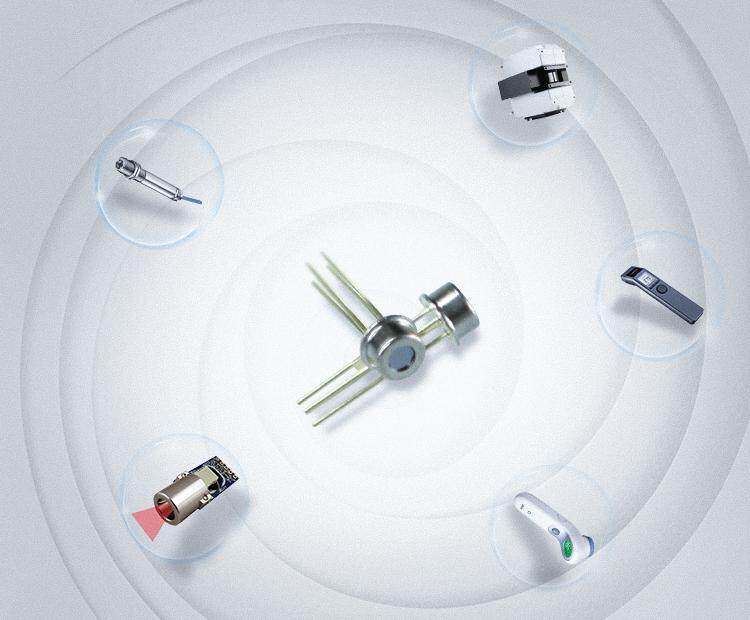
<p><img src="https://material-image.wanwang.xin/33017595/public/66e07c20-17ac-4aa9-a0ae-1f846678fce8.jpg" wrapperstyle="display: inline-block; float: left; padding-right: 8px;" style="display: inline-block; padding-right: 8px;"></p><p>Definition and Principle of Infrared Thermopile Modules<br>An infrared thermopile module integrates an infrared thermopile sensor with thermopile elements. The infrared sensor detects infrared radiation in the surrounding environment and converts it into an electrical signal, while the thermopile element converts temperature changes into a potential difference. By combining these two components, the infrared thermopile module can simultaneously detect and identify both infrared radiation and temperature variations in the environment, ultimately outputting an electrical signal.</p><p>Infrared thermopile modules feature high precision, stability, and fast response times. They can quickly detect temperature changes in the surrounding environment and output corresponding electrical signals. Additionally, through filtering techniques, these modules eliminate interference signals to enhance signal stability and reliability, enabling more accurate detection and identification of environmental temperature changes.</p><p>Applications and Future Trends of Infrared Thermopile Modules in Smart Sensing Technology<br>Infrared thermopile modules are widely used in smart sensing technology across security monitoring, automation control, and smart home systems. In security monitoring, they detect and track targets by identifying temperature variations in the environment. In automation control, they enable intelligent device management, improving production efficiency and quality. In smart homes, they provide intelligent environmental sensing and control, enhancing comfort and quality of life.</p><p>As intelligence levels continue to rise, the application prospects for infrared thermopile modules in smart sensing technology are expanding. With ongoing technological advancements, these modules will become more precise, efficient, and intelligent, providing critical support for the development of smart sensing technologies.</p><p>This article covers the definition and principles of infrared thermopile modules, along with their applications and future trends in smart sensing technology. As a key component of future smart sensing systems, infrared thermopile modules will play increasingly vital roles in security monitoring, automation control, and smart home environments. We anticipate that these modules will evolve to be even more precise, efficient, and intelligent, offering stronger support for the advancement of smart sensing technologies.</p>